
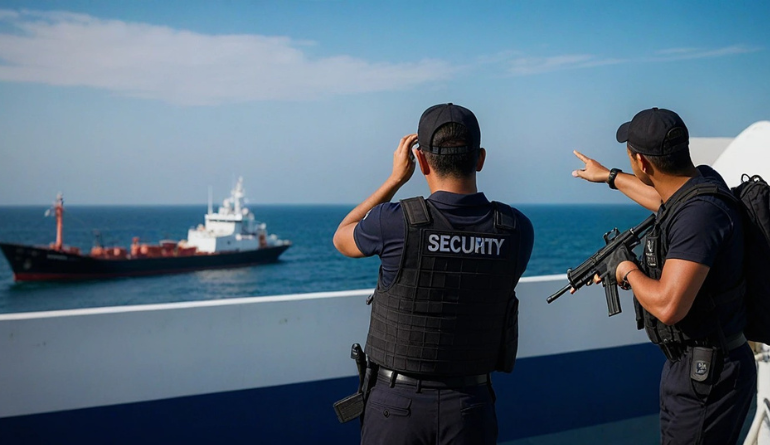
Maritime Security Services for Vessels, Ports and Offshore Operations
Protecting Vessels, Crews, Cargo and Maritime Assets
Maritime operations face a range of security challenges, from piracy and unauthorised boarding to stowaways, cargo theft, smuggling and security vulnerabilities at anchorage and port facilities.
SecuriState provides maritime security services in Singapore and selected international operating areas, supporting shipowners, shipping companies, vessel operators, marine logistics businesses and other maritime stakeholders.
Our maritime security capabilities include armed and unarmed maritime security escorts, vessel protection, anchorage security, counter-piracy risk assessments, stowaway prevention, maritime drone surveillance, vessel hardening and security support for offshore operations.
We develop security arrangements around the vessel, voyage, operating environment and identified threats. Whether protecting a commercial vessel during transit, securing an anchored ship or conducting a pre-departure security inspection, our focus is to help clients manage risks while maintaining operational continuity.

Armed & Unarmed Maritime Security Escorts (Anti-Piracy)
Maritime Threat & Risk Assessments
Counter Piracy Audits
Vessel Security
Ensure your ship’s safety while docked. We provide 24/7 port surveillance, access control, and threat prevention—protecting vessels and cargo in compliance with ISPS standards.
Maritime Drone Services
Enhance maritime security with real-time drone surveillance. Our aerial solutions aid in threat detection, anti-piracy, inspections, and rescue operations, with 150+ missions completed.
Counter Piracy Audit
Identify and mitigate piracy risks with our expert audits. We’ve helped reduce incidents by 40% through BMP compliance, crew training, and vulnerability assessments.
Contraband Enforcement
Combat smuggling with proven contraband enforcement. Our teams conduct inspections, surveillance, and canine patrols to prevent illegal activities at sea and in port.
Vessel Hardening
Strengthen vessel defenses with our hardening solutions. We install physical barriers and anti-boarding systems, reducing boarding attempts by 35% in high-risk areas.
Maritime Security Training
Train your crew to handle maritime threats with confidence. Our certified programs cover piracy response, ISPS compliance, and emergency preparedness—tailored to your vessel.
Protect Your Vessels, Crew and Maritime Assets with SecuriState
Maritime security requires proactive planning, effective protective measures and personnel who understand the operational challenges of working at sea.
Whether you require armed or unarmed maritime security escorts, anchorage protection, vessel security searches, anti-piracy assessments or maritime drone surveillance, SecuriState can help assess your requirements and explore an appropriate security arrangement.
Speak to our team about your vessel, voyage or offshore security requirements.
Frequently Asked Questions About Maritime Security Services
What do maritime security services include?
Maritime security services can include vessel protection, armed and unarmed maritime security escorts, anti-piracy support, anchorage security, stowaway prevention, vessel inspections, maritime risk assessments, vessel hardening and security surveillance. The actual scope depends on the vessel, voyage, location and identified security requirements.
What is the difference between armed and unarmed maritime security escorts?
Armed maritime security escorts involve the deployment of privately contracted armed security personnel onboard a vessel, where legally permitted and appropriately authorised. Unarmed maritime security personnel provide protective services without firearms, which may include watchkeeping, access control, surveillance, security inspections and liaison with relevant maritime stakeholders.
The appropriate arrangement depends on the threat assessment, vessel requirements and applicable laws.
What is the ISPS Code in maritime security?
The International Ship and Port Facility Security (ISPS) Code is an international framework established under the SOLAS Convention to enhance the security of ships and port facilities. It establishes security responsibilities and measures relating to security assessments, plans, designated officers and operational procedures.
The requirements that apply depend on the vessel or facility and its scope of operation.
Does SecuriState provide vessel security in Singapore?
SecuriState provides maritime security support for vessel-related requirements, including in-port protection, anchorage security, access control, vessel inspections and security watchkeeping, subject to the agreed assignment scope and operational requirements.
What is anchorage security?
Anchorage security involves protective measures for vessels remaining at designated anchorage locations. This may include security watchkeeping, access control, monitoring of potential unauthorised boarding and other protective arrangements to safeguard vessels, crews and assets.
How can shipowners prevent stowaways?
Stowaway prevention involves identifying potential unauthorised boarding routes, implementing effective access control, monitoring vessel entry points and conducting appropriate pre-departure security searches. Vessel-specific procedures and crew awareness are also important in reducing the risk of unauthorised persons boarding a ship.
What is a counter-piracy audit?
A counter-piracy audit is a review of a vessel’s security arrangements to identify vulnerabilities and evaluate its readiness against piracy and armed robbery risks. It may examine access points, watchkeeping, physical protection measures, crew procedures and emergency response arrangements.
What is vessel hardening?
Vessel hardening involves implementing physical measures designed to make unauthorised boarding more difficult and strengthen vulnerable areas of a vessel. Measures may include protective barriers, anti-climbing systems and improvements to selected access points, depending on the vessel’s design and operating requirements.
What information is required to request a maritime security quotation?
To assess a maritime security requirement, shipowners and vessel operators should provide details such as vessel type, flag state, current location, intended voyage or operating area, estimated deployment dates, duration and nature of the required services. For armed security assignments, relevant authorisation, insurance and regulatory requirements must also be considered.
